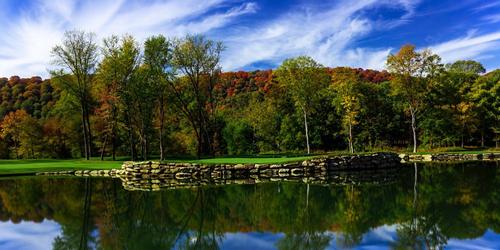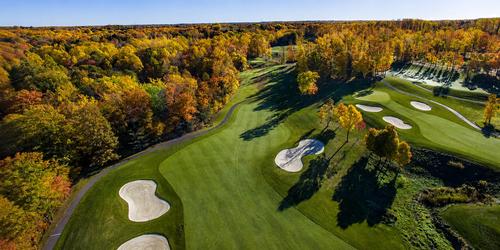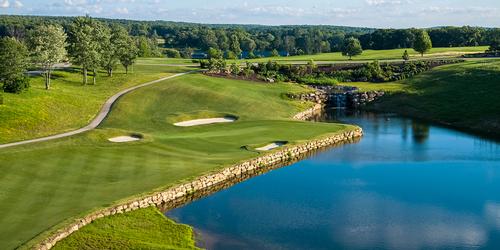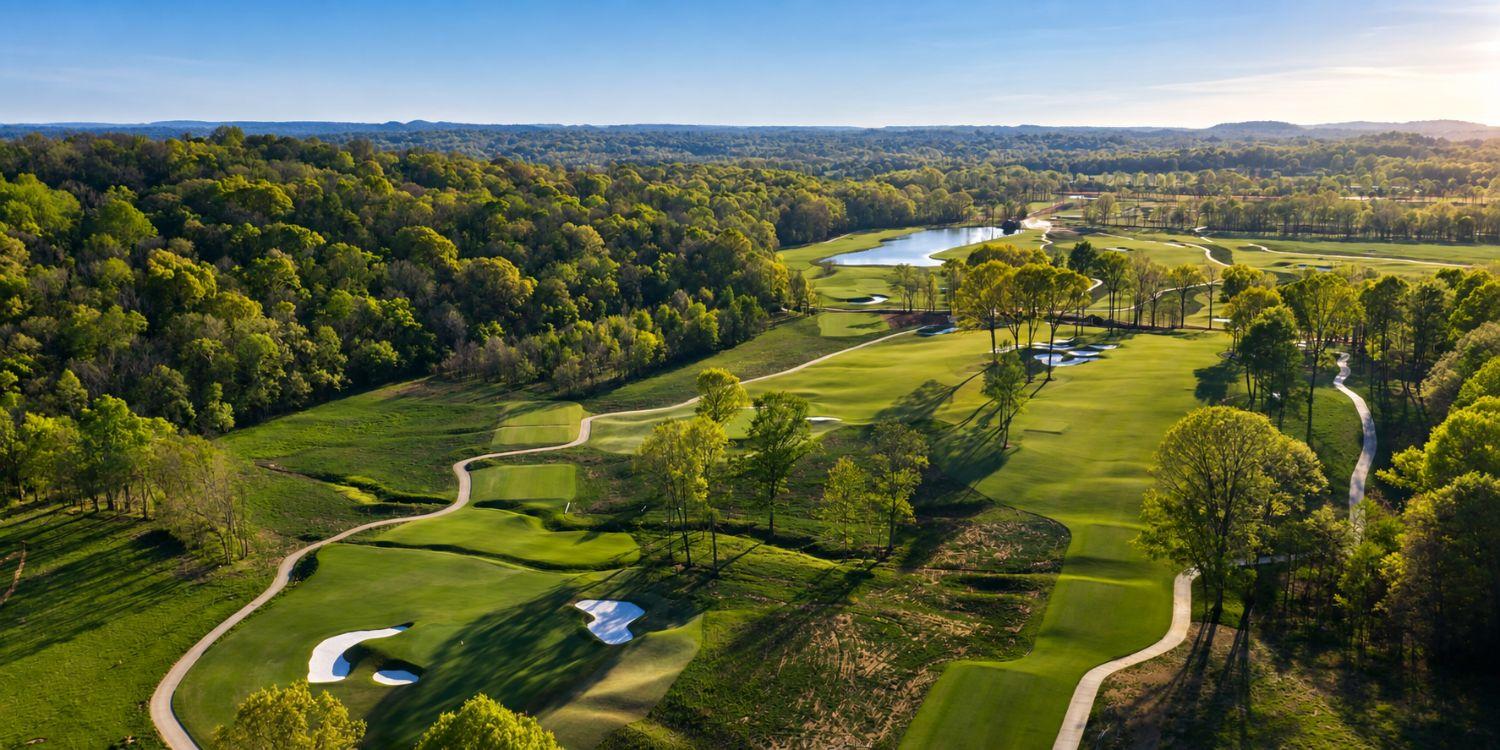

For most new golf communities, the sales pitch runs years ahead of the product. You buy a lot off a rendering, you trust the architect's routing plan, and you hope the course that eventually opens looks like the one in the brochure. Firefly just flipped that order. The 700-acre private community in Spring Hill, Tennessee, opened its Andrew Green-designed 18-hole course and nine-hole short course over Labor Day weekend 2026, and it did so with fewer than 30 homesites left across its first two phases.
That is the frame for this piece. The golf is real and playable. The lots are nearly gone. If Firefly has been on your list, the window for buying into the founding phases is closing, and the next chapter of pricing will almost certainly look different. Here is what a buyer should understand before picking up the phone.
Where Firefly Sits
Firefly is in Maury County on the east side of Interstate 65, roughly 30 miles south of downtown Nashville and 15 miles south of downtown Franklin. The gated entrance is on Highway 431, about five miles south of the June Lake exit. The sales center is at 3071 US-431 in Spring Hill.
Spring Hill matters here. A decade ago it was best known as the town with the GM plant. Today it is one of the fastest-growing cities in Tennessee, riding the same wave that turned Franklin and Brentwood into some of the most expensive real estate in the South. Firefly is positioned just far enough south of that wave to buy 700 acres of rolling farmland, and just close enough that the commute to Cool Springs, downtown Franklin or Nashville International Airport is realistic for a working household.
The community is zoned for Marvin Wright Elementary, Battle Creek Middle and the new Battle Creek High School, with private options including Battle Ground Academy, Franklin Road Academy, Grace Christian Academy and Agathos Classical School within driving distance. This is not a retirement community. It is built for families with kids in school, and the amenity plan reflects that.
The Golf, Now That It Exists
Andrew Green built his reputation restoring golden-age courses, and the list reads like a tour of American golf history: Congressional, Oak Hill, Inverness, Scioto, Interlachen and East Lake. His Interlachen restoration earned Golf Digest's Best Renovation honors in 2025. Firefly is the first original design of his career, which is why golf writers from Golfweek to Athlon paid attention to a private club in a town most of them had to look up.
The 18-hole course is a walking-friendly core layout, meaning the holes sit together in one block rather than winding through subdivisions. Homesites frame the course from the edges rather than crowding the fairways. Tees run from more than 7,300 yards to 4,860, a spread wide enough to serve a single-digit handicap and a spouse or teenager who plays twice a month. Green's stated design priorities are strategic angles, varied shot-making and heavily contoured greens, which is exactly what a buyer should expect from someone who spent two decades studying Ross and Tillinghast.
The nine-hole short course runs from 70 to 210 yards, which is long enough to require real clubs and short enough to play in under an hour with a nine-year-old. For a family community, this may end up being the more valuable of the two courses on a Tuesday evening.
The practice complex, called the Fieldhouse, covers 12 acres with seven target greens, 20 all-weather hitting stations, two acres of short-game area, an 18,000-square-foot putting green, two Trackman hitting bays, a SAM putting lab and a bar and grill. Joe Hallett, PGA, was hired as Director of Golf Instruction earlier this year. Nobody builds a 12-acre practice campus for a club that plans to be casual about golf.
Sales Velocity: Reading the Numbers
Storied Development launched homesite sales in the summer of 2025 and sold more than 80 lots in 45 days, most of them to Founder and Encore members who had put down deposits before the first phase was released. The second phase launched in early May 2026 with roughly 60 buyers already in line. As of the September 2026 course opening, the developer reports nearly 150 homesites sold since launch, more than 4,000 sales inquiries converted to 350-plus property tours, and fewer than 30 homesites remaining across Phases I and II.
A buyer should read those figures for what they are: developer-reported, and reported at a moment designed to generate urgency. That said, the trajectory is consistent across a year of announcements, and the course opening removes the biggest risk that usually hangs over a pre-development purchase. Firefly is entitled for 407 single-family homes, so roughly a third of the community's total inventory has moved before the first house has been built. Later phases will come, but they will come at whatever price the market sets after the golf has been reviewed, ranked and photographed.
Homesite Pricing and What Is Left
Pricing has moved. The Firefly website, last updated in spring 2026, lists homesites from the $600,000s to $1.5 million and up. The developer's September 2026 release puts the current range at $700,000 to more than $2 million. That gap is the story: roughly a year of sales has pushed the entry point up about $100,000 and the top end up several hundred thousand.
The remaining inventory is described as a limited selection of golf-frontage, creekside and green-space homesites connected by a planned trail network. Available custom lots are marketed as offering ridgeline, golf or nature views. Owners are not required to build, and there is no build deadline published in the FAQ, though buyers should confirm any timing requirements in the actual purchase documents rather than the website.
Future home pricing is anticipated to start at $2.9 million. That is the developer's own number for finished homes, and it tells you the all-in expectation: a lot in the high six figures or low seven figures, plus a custom build that will likely land between $2 million and $3 million or more. Firefly is not competing with production golf communities. It is competing with The Grove in College Grove, which the same development team built, and with the established private clubs in Franklin and Brentwood.
Firefly's signature builder program includes Davis Properties, Legend Homes, Luna Custom Homes, Ford Classic Homes, Stonegate Homes, Schumacher Homes and Sipple. The architectural direction is traditional Southern and farmhouse with a modern edge: wide front porches, pitched roofs, wood and stone, clean lines and open layouts. Anderson Design Studio of Nashville is handling interiors for the club buildings.
The Membership Structure, Plainly Stated
This is the section sales offices tend to talk around, so here it is straight from Firefly's published FAQ.
Club membership is mandatory for every resident. The only way to secure a permanent membership is to buy real estate. Founder and Encore members, the early supporters who bought in before the first phase, can hold membership without owning property under their specific agreements, and the club may offer recallable non-resident memberships at its discretion. Recallable means exactly what it sounds like.
Firefly Club is a right-to-use club, not an equity club. A member acquires a license to use the facilities, not an ownership stake. The initial membership deposit is $100,000, refundable less a 20 percent transfer fee under the membership documents. The developer states plainly that the deposit will likely increase for future buyers as the golf course and amenities are completed. The golf course is now complete. Draw your own conclusion about where the deposit is headed.
Annual club dues were set to begin once the course opened, which means they have begun. The published starting figure is $12,000 per year, with the explicit note that dues will increase annually as amenities come online. Property owners association dues are anticipated to start at $3,000 per year, begin at closing and increase annually. POA dues were being waived until first-phase infrastructure was completed.
Membership is capped at 415 members plus the Founder and Encore members who do not own real estate. With 407 entitled homes, the math works out to roughly one membership per home, which is a tighter cap than many communities of this size publish.
Two provisions worth noting on the positive side. First, the FAQ states there are no assessments for operating or capital deficits during developer ownership without member approval. Second, if the developer ever sells the club to a third party, members are protected with a right of first offer and a predetermined price. Both of those are better than what many right-to-use clubs offer, and both are worth confirming in the actual membership documents.
Immediate family members receive the same use privileges as the member. Extended family can use the club on payment of preferred fees.
All figures above are as published by Firefly as of September 2026 and should be confirmed directly with the Firefly sales team and reviewed in the membership and property documents before any commitment. This is editorial reporting, not financial or legal advice.
Infrastructure, Financing and the Sewer Question
Firefly has been unusually transparent about how the project is funded, which is a good sign for a buyer doing diligence. The community is funded by equity from Wheelock Street Capital and Storied Development, plus a $5 million development loan and a $20 million letter-of-credit facility from Hancock Whitney Bank. The letter of credit provides the financial surety Maury County requires for infrastructure. Both facilities are secured by unsold homesites and undeveloped land, and the bank issues a partial release on each lot at closing so buyers take title free and clear.
Buyers close on their homesite before infrastructure is installed and receive a 15 percent pre-development incentive for doing so, which is how Storied has sold lots at its other communities. Closings begin within two weeks of the final plat being recorded for each phase. Phase 1 infrastructure was expected to take about a year, with building permits for homes projected for the first quarter of 2027 and home construction beginning in spring 2027.
One local issue a buyer will hear about: Spring Hill has been operating under a sewer moratorium. Firefly's developer update from November 2025 addressed this directly, stating that Firefly, like The Grove, uses an independent sewer operator called Aqua Green and does not expect the moratorium to delay building permits, which will be issued through Maury County rather than the City of Spring Hill. That is a reasonable answer, and it is also one worth asking about again, in writing, before closing.
What Is Not Built Yet
Firefly opened the golf first and is building the club around it. Buyers should be clear-eyed about the timeline.
The first three club buildings, the Golf Shop, the Fieldhouse and the Outpost, were designed by Swaback Architects and Planners and are scheduled to open in spring 2027. The Golf Shop will overlook the first, tenth and eighteenth holes and is planned as a coffee and gathering spot as much as a pro shop. The Fieldhouse is the practice campus and its bar and grill. The Outpost has not been described in detail publicly.
The full amenity plan, to be phased in over time, includes a clubhouse, fitness center, family club, adult and family pools, bowling alley, golf simulators, an interactive game room, a multisport court, a music hall, a STEAM/STEM learning center and a racquet club with tennis, padel and indoor pickleball. No dates have been published for those. A buyer moving in during 2028 should expect to be playing excellent golf at a club that is still under construction around them, and should expect dues to rise as each piece arrives.
That is not a criticism. Opening the course first is the right sequence, because the golf is the one thing that cannot be fixed later. But it means the lifestyle being sold in the renderings is several years out, and the 415-member cap will be tested against a 407-home community that is still filling in.
Who Firefly Is For
Firefly is built for families with school-age children and the means to spend $3 million or more on a home and lot, who want serious golf without the drive to a legacy Nashville club, and who are comfortable buying into a community that will spend the next several years under construction. The developer's own language, "connection across generations," is a tell. The bowling alley, the learning center, the family pool and the short course are not there for a couple of retirees.
It is also a strong fit for a golf-first buyer who values architecture. Green's name will bring national raters to Spring Hill, and a course that lands on a Golf Digest or Golfweek list within its first few years does real things to lot values in the phases behind it.
Firefly is a weaker fit for someone who wants a finished club on day one, who is uncomfortable with a right-to-use structure or a six-figure refundable deposit, or who is not prepared for annual dues that start at $12,000 and are openly expected to climb.
The Bottom Line
Firefly is where a new golf community is supposed to be at this stage and rarely is: the course is open and getting national attention, the developer is debt-light and transparent about its financing, the sales numbers are strong and consistent, and the fine print on membership is published rather than buried. The gaps are the ones you would expect. The amenities are a year to several years out, dues and deposits are explicitly headed upward, and the remaining lots in the founding phases can be counted on two hands and a foot.
If Firefly is on your list, the practical advice is simple. Call the sales center at (615) 398-4568, ask for the current availability map and the membership and property documents, and get the sewer, permit and infrastructure timelines in writing. Then play the golf course. That is the one part of this community that is no longer a promise.